Nova Poshta: Logistics That Didn’t Stop
How Ukrainian Business Rebuilt Its Work During a Full-Scale War and Turned the Logistics Network into One of the Country’s Resilience Infrastructures
On February 24, 2022, almost everything changed for Nova Poshta. Millions of people left their homes, businesses shut down or relocated, familiar transport routes became dangerous or inaccessible, and some branches found themselves in occupied territories or directly in the war zone.
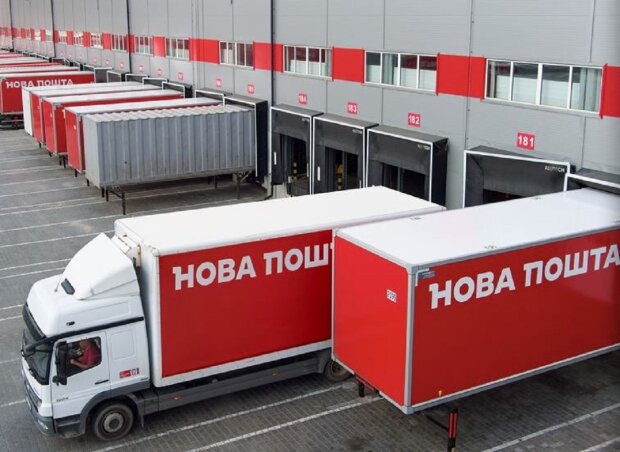
For the logistics company, this meant a crisis at the very foundation of its business: a network built on predictable routes, stable branch operations, and rapid cargo movement across the country had to learn to operate in conditions where the situation could change within hours.
The company couldn’t just wait for normal conditions to return.
It was necessary to create a new normal.
The first challenge is to maintain communication between people
In the first weeks of the invasion, some branches stopped working. Parcels remained in cities that were difficult or impossible to access. Routes had to be changed according to the security situation.
Nova Poshta introduced mechanisms for redirecting shipments from non-working branches, updated information about the available network daily, and continued courier delivery wherever the security situation allowed.
Logistics was no longer just a matter of delivery speed.
For people who evacuated to other regions, it became a way to get things from home. For businesses, it was an opportunity to continue selling goods. For volunteers, it was a channel for delivering aid. For front-line areas, it was one of the ways to maintain contact with the rest of the country.
Working where the usual infrastructure disappears
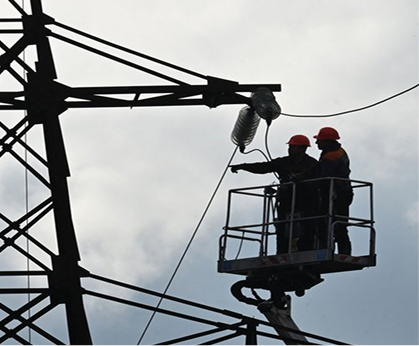
The next test was the massive attacks on the Ukrainian power system.
Branches and sorting centers had to continue operating during emergency power outages and communication disruptions. The company began to increase the autonomy of the infrastructure, using generators and backup communication channels, including Starlink.
The principle of operation changed: the business had to be ready to function not only under normal conditions, but also in the absence of some of the systems on which it previously depended.
This is one of the key lessons of Ukrainian business during the war – the reservation of critical resources became not an additional option, but part of the operating model.
Returning with the cities
Another feature was the resumption of work in the territories liberated from Russian occupation and the continuation of deliveries to frontline regions.
Thus, the network was constantly changing along with the situation in the country: some points were temporarily closed due to danger, others resumed work as soon as it became possible.
Even years after the beginning of the invasion, this model remains relevant. Reuters described the company’s work in conditions of regular air raids, blackouts, and damaged infrastructure, and noted that deliveries continued even to frontline cities.
From commercial logistics to humanitarian infrastructure
The war also changed the role of the company itself.
Nova Poshta created the Humanitarian Mail of Ukraine project back in 2014 in response to Russian aggression. After February 24, 2022, it was transformed into a separate humanitarian direction of the company’s activities.
In 2022, Nova Poshta opened four humanitarian hubs. The company provided logistics for charitable foundations and volunteer organizations, including “Return Alive”, the Serhiy Prytula Foundation, “Zhyttelyub”, UAnimals, and others.
That is, the existing commercial infrastructure was adapted to the new social need.
What used to transport goods between seller and buyer before the war began to transport humanitarian aid to where it was needed most.
Not just surviving – continuing to develop
Perhaps the strongest part of this case is that Nova Poshta’s adaptation did not end with the resumption of work.
The company continued to expand its network in Ukraine and, in parallel, began to actively build the international Nova Post network, focused, in particular, on the millions of Ukrainians who found themselves abroad after the invasion.
Thus, another consequence of the war – the large-scale displacement of Ukrainians – changed the geography of the business itself.
According to Reuters, by the end of 2025, the company was already operating in 16 countries, had about 30 thousand employees, about 15 thousand branches and almost 33 thousand post offices. In 2024, Nova Poshta delivered a record 480 million shipments, and the volume of operations exceeded 1.5 million parcels per day.
Resilience Formula
Nova Poshta’s experience shows that the resilience of large businesses during wartime consists of more than one solution.
This is the ability to quickly change routes and processes; decentralize and reserve critical infrastructure; ensure energy and communication autonomy; return to the territory as soon as the security situation allows; use existing business resources for public needs and at the same time continue to invest in development.
It is more important not to try to preserve the pre-war model of work at any cost.
Resilience lies in the ability to constantly change it.
In conclusion
In conditions of a prolonged crisis, adaptation ceases to be a temporary reaction and becomes a permanent business process.
Nova Poshta has learned to work in conditions where it is impossible to guarantee power supply, stability of routes, physical integrity of infrastructure, or even the ability to work in the same city tomorrow.
And at the same time, the company continued to perform its main function – to connect people and businesses with each other.